How Thick Should a Commercial Concrete Slab Be? Atlanta Industrial Standards Explained
Slab thickness decisions for Atlanta commercial and industrial facilities depend on use case, load type, soil conditions, and local code requirements. If you are planning a warehouse floor, industrial pad, or parking area in Atlanta, GA, this guide explains the thickness standards that apply to your project and the key decisions every commercial concrete slab contractor should walk you through before a single yard of concrete is poured.
Slab Thickness by Use Case
Slab thickness is not one-size-fits-all. The right depth depends on what loads the slab must carry, how often those loads are applied, and what sits beneath the concrete.
Light Commercial Spaces (Retail, Offices, Restaurants)
A 4-inch slab is a common starting point for light-duty applications such as retail storefronts, office floors, and restaurants. These slabs handle foot traffic and light furniture loads. Going to 5 inches can improve crack resistance in high-foot-traffic areas.
Warehouses and Distribution Centers
Standard warehouse and distribution center floors typically fall in the 6-inch range. These slabs must handle forklifts, pallet jacks, and dense rack storage. A skilled commercial concrete slab contractor serving Atlanta, GA, will size the slab based on forklift capacity, rack point loads, and aisle layout rather than relying on a single rule of thumb.
Heavy Industrial and Manufacturing Facilities
Heavy industrial settings often require slabs from 8 to 12 inches thick. Machine foundations, tank pads, and equipment pads that serve large manufacturing operations in metro Atlanta's industrial corridors can see point loads that exceed anything a standard 6-inch slab is designed to handle. In these cases, slab thickness may need to be engineered specifically for the equipment being installed.
Parking Areas and Drive Lanes
Parking lots and internal drive lanes for commercial trucks may require 6 to 8 inches of concrete depending on vehicle class. Truck courts serving distribution facilities near major Atlanta logistics hubs along I-285 and I-20 often fall at the higher end of that range.
Reinforcement Options: What Goes Inside the Slab
The right reinforcement method matters as much as thickness. Each option has different performance characteristics, and an experienced commercial concrete slab contractor can recommend the right fit for your facility.
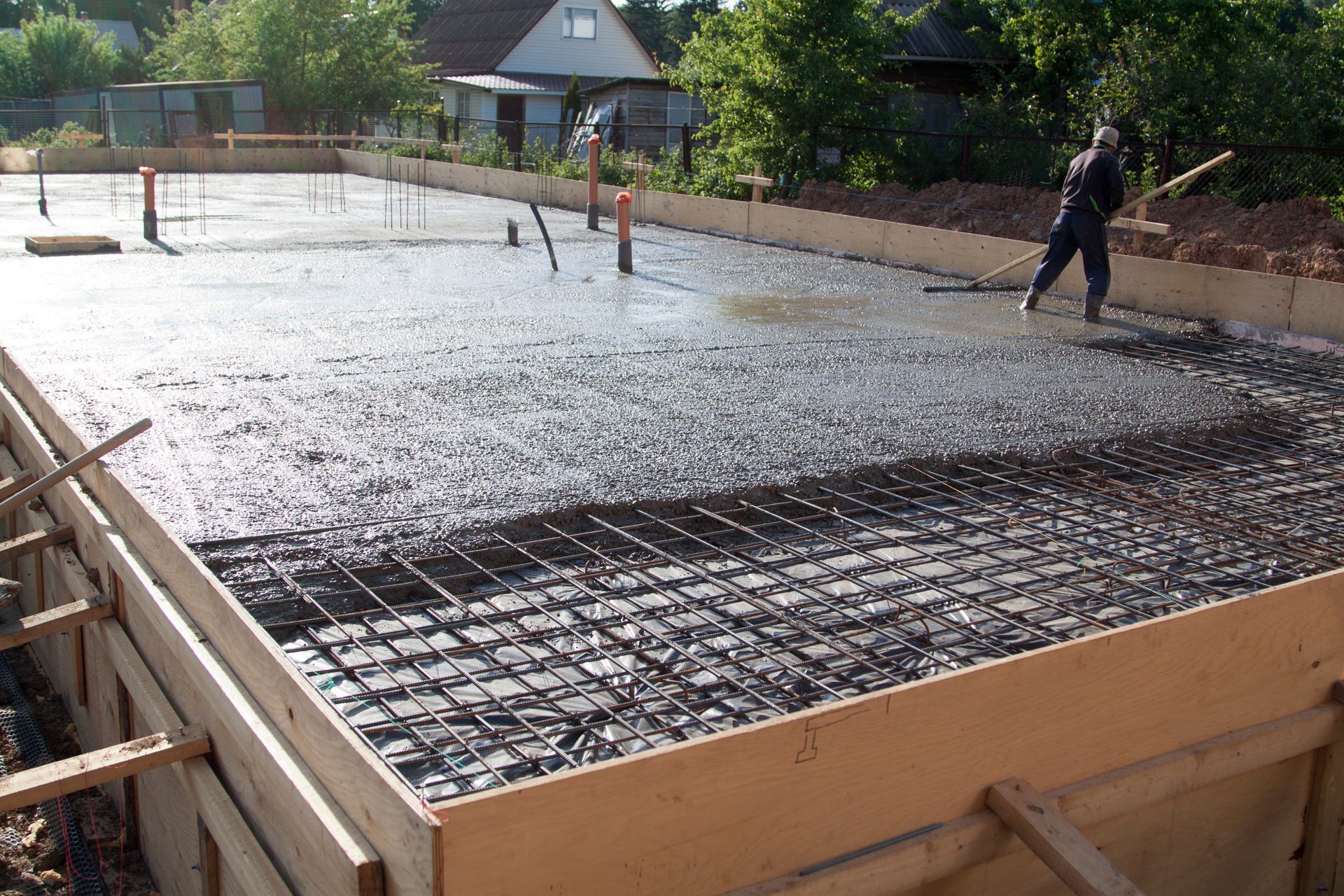
Rebar (Steel Reinforcing Bars): Rebar provides strong structural reinforcement and is typically used in heavier slabs where point loads from machinery or equipment racks are a concern. It is the most common choice for machine foundations and heavy equipment pads.
Wire Mesh (Welded Wire Fabric): Wire mesh helps control shrinkage cracking in lighter slabs and is a cost-effective option for general commercial floors. It does not add the same structural strength as rebar under heavy concentrated loads.
Fiber Reinforcement: Steel or synthetic fibers mixed directly into the concrete can help control cracking and may allow some slab designs to reduce joint spacing. Fiber reinforcement is increasingly common in warehouse floors as a supplement to or partial replacement for traditional mesh. The American Concrete Institute's ACI 360 guide addresses fiber use in slabs-on-ground specifically.
For industrial projects, rebar combined with a proper vapor barrier and compacted base remains the most reliable approach for Atlanta-area facilities dealing with Georgia's expansive clay soils.
Georgia Code and Inspection Notes
Georgia's building code, which follows the International Building Code and references ACI 318 for structural concrete design, sets a minimum floor slab thickness of 3.5 inches for slabs supported directly on grade. That is an absolute floor for the lightest applications. Most commercial and industrial work must meet significantly higher standards based on load analysis and project type.
Any commercial concrete slab contractor working in Atlanta and the surrounding DeKalb and Fulton County areas must pull the appropriate permits and comply with inspection requirements. Structural slabs that carry loads from other parts of a building require engineering review. Slabs supporting heavy equipment, machine foundations, or elevated structures should always be designed by or reviewed with a licensed structural engineer.
Common Mistakes to Avoid
Underbidding thickness to reduce upfront costs is one of the most damaging decisions a facility owner can make. A slab that cracks under forklift loads or settles unevenly due to poor subgrade prep will require costly replacement. Common mistakes include:
- Skipping soil testing before design, especially on Atlanta-area sites with clay-heavy or previously disturbed subgrade.
- Specifying a residential-grade 4-inch slab for a use case that actually needs 6 or more inches.
- Using wire mesh where rebar is required for heavy point loads.
- Spacing control joints incorrectly for the slab thickness, which can lead to random cracking.
- Pouring over uncompacted fill without proper base preparation.
When Should You Consult a Structural Engineer?
You should consult a structural engineer before design if the slab will support heavy or specialized machinery, carry rack loads above general warehouse standards, serve as a structural diaphragm, or sit on poor or unpredictable soil. Any project where the consequence of slab failure is severe downtime or equipment damage warrants an engineered design rather than a prescriptive thickness table.
Get the Right Slab Design for Your Atlanta Facility
Choosing the correct slab thickness for a commercial or industrial project is a decision that affects your facility for decades. The right commercial concrete slab contractor brings more than a pour crew to the job. Norton Civil Construction has been serving industrial and commercial facilities across the Atlanta metro area since 1995, providing licensed, bonded, and insured concrete work with the experience to get slab design right the first time.
To discuss your project and request a free competitive estimate, visit our
Atlanta concrete services page or reach our team directly at
our estimate request page. Call
404-992-4424 today. You can also find us and read client feedback on our
Norton Civil Construction Google Business Profile.