Asphalt vs. Concrete Paving for Atlanta Commercial Properties: What a Commercial Concrete Paving Contractor Recommends in 2026
Choosing the right paving material for your Atlanta commercial property can affect your budget, operations, and maintenance costs for decades. This article compares asphalt and concrete so Atlanta property owners, facility managers, and developers can make a well-informed choice in 2026. Material selection depends heavily on your site's specific demands, not just upfront cost, so consulting a commercial concrete paving contractor early in planning ensures site-specific factors are accounted for before budgets are set.
How Atlanta's Climate Shapes Your Paving Choice
Atlanta's climate puts real stress on commercial pavements. The metro area regularly sees summer temperatures above 90°F, annual rainfall between 45 and 55 inches, high humidity, and occasional winter freezes in Gwinnett, Cherokee, and Forsyth counties.
Asphalt is a flexible material that can absorb minor ground movement and soil settling, which matters in Atlanta, where expansive red clay soils shift with moisture. However, asphalt softens under intense heat. During peak summer months, heavily loaded parking lots, loading docks in the Fulton Industrial corridor, and big-box retail drive lanes can experience surface rutting if the asphalt mix is not correctly specified.
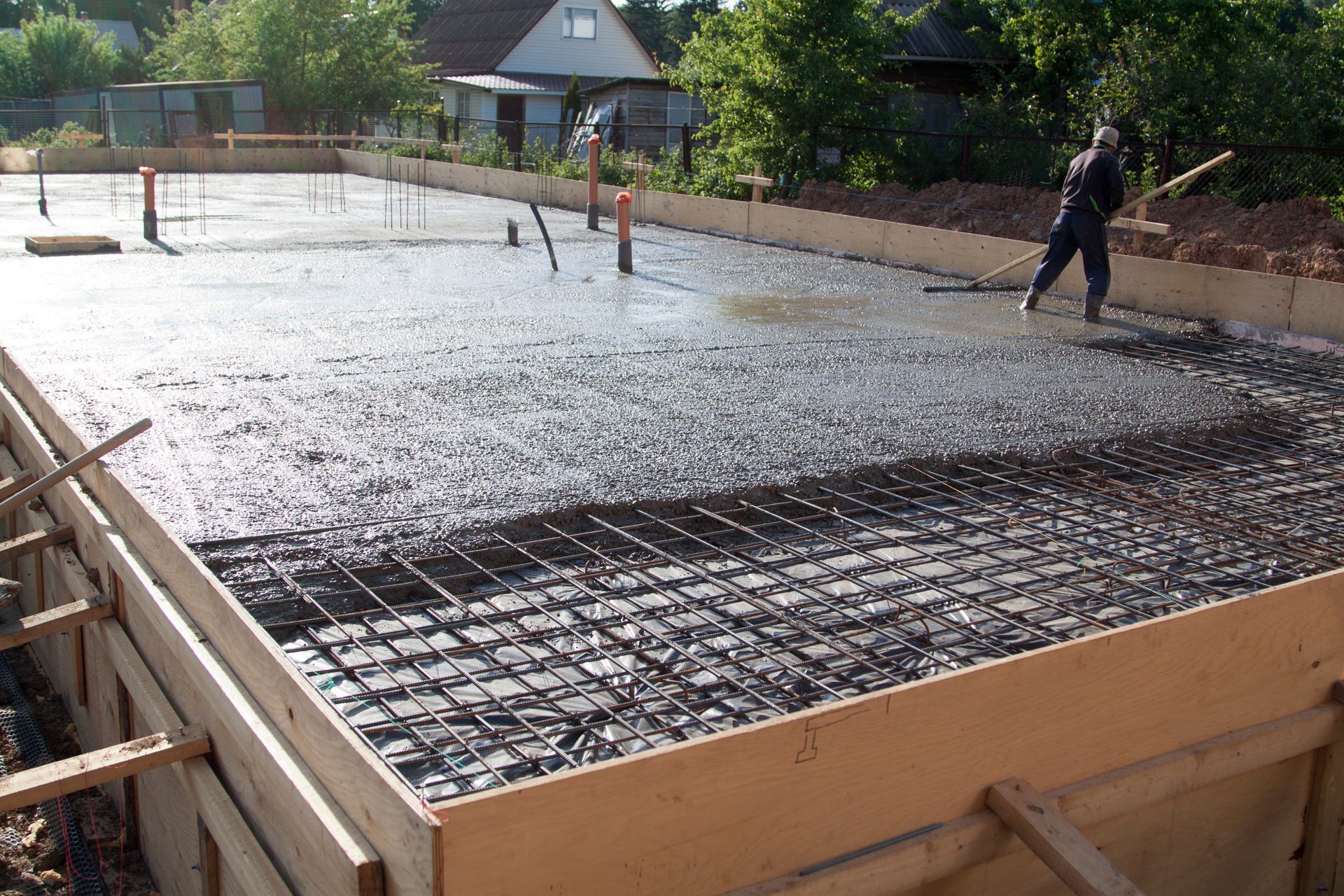
Concrete is rigid and resists softening under high temperatures, which suits Atlanta's long, hot summers. However, it may crack when the ground shifts, a real concern given the clay-heavy soil across DeKalb, Cobb, and Gwinnett counties. Proper sub-base preparation and expansion joint placement are critical. A qualified commercial concrete paving contractor will assess soil conditions, drainage, and load requirements before recommending a design approach.
Comparing Cost, Durability, and Maintenance
Asphalt typically costs less to install upfront, making it a common choice for owners focused on immediate capital expenditure. Concrete carries a higher initial cost but can offer a longer service life when properly engineered and installed. Working with a commercial concrete paving contractor who understands Atlanta's soil and climate conditions is one of the most effective ways to protect that investment.
A well-maintained asphalt surface may last 20 or more years with regular sealcoating and crack repair. Concrete in similar conditions can exceed 30 years with significantly less ongoing maintenance. For high-traffic applications like industrial facility aprons, distribution center driveways near I-285, and logistics parks in Forest Park and College Park, concrete's load-bearing capacity may deliver better long-term value despite the higher upfront cost.
Asphalt requires periodic sealcoating and spot patching. Concrete requires less frequent maintenance, but repairs are more involved and harder to blend with existing surfaces.
Quick Comparison: Asphalt vs. Concrete for Atlanta Commercial Properties
When evaluating asphalt against concrete for Atlanta commercial properties, the key factors come down to cost, durability, and site compatibility. Asphalt offers a lower upfront cost and can last 20 years or more with regular sealing and patching, though it may soften during peak summer heat and requires more frequent maintenance. Concrete carries a higher initial investment but typically exceeds 30 years of service life, resists heat-related softening, and handles heavy loads exceptionally well. Repairs to concrete are more involved and harder to blend with existing surfaces. Asphalt's flexibility makes it more tolerant of Atlanta's clay soil movement, while concrete performs best when a strong sub-base is properly engineered from the start.
Environmental Considerations for Atlanta Commercial Sites
Concrete reflects more sunlight than dark asphalt, which may help reduce the urban heat island effect in dense Atlanta neighborhoods like Midtown, Buckhead, and the Old Fourth Ward. Pervious concrete options can also support stormwater management, which is relevant given Atlanta's heavy seasonal rainfall and local ordinances enforced by Fulton and DeKalb counties. Asphalt is recyclable at a high rate, and warm-mix options reduce energy use during production. Both materials have trade-offs, and the better choice may depend on your permitting requirements and sustainability goals.
Which Material Is Right for Your Atlanta Commercial Property?
Concrete may be the stronger choice for heavy industrial use, high-load properties, or long-term infrastructure investments where lower maintenance matters most. Asphalt may suit tighter upfront budgets, shorter occupancy cycles, or sites where ground movement risk from red clay soil is higher. In either case, working with an experienced commercial concrete paving contractor ensures the selected material is properly engineered for your site rather than a generic specification.
What Types of Atlanta Commercial Properties Tend to Use Concrete Paving?
Concrete is commonly used for industrial facilities, manufacturing plants, equipment pads, warehouse aprons, and loading dock areas. Atlanta's industrial zones along the I-20, I-75, and I-85 corridors include many examples where concrete's durability and load capacity made it the preferred material. A commercial concrete paving contractor with experience in these project types will understand the thickness, reinforcement, and joint spacing requirements that determine long-term performance.
Is Asphalt or Concrete Better for Atlanta Parking Lots?
Neither material is universally better. Asphalt tends to be chosen for standard passenger vehicle parking due to its lower install cost and easier patching. Concrete may be preferred where heavy delivery trucks, forklifts, or fleet vehicles operate regularly, or where the owner expects to hold the property long-term and wants to minimize ongoing maintenance.
How Does Atlanta's Red Clay Soil Affect Paving Material Choice?
Atlanta's red clay soil expands when wet and contracts when dry, stressing rigid concrete slabs if the sub-base is not properly engineered. Asphalt's flexibility tolerates minor soil shifts better than concrete. However, a well-prepared gravel sub-base can significantly reduce this risk for concrete installations, making sub-base preparation one of the most important steps in any Atlanta commercial paving project.
Make a Confident Paving Decision With the Right Team Behind You
Every commercial site in Atlanta, GA, is different. Soil conditions, traffic loads, drainage design, budget cycles, and local ordinances all factor into which material will serve your property best.
Norton Civil Construction has been serving the Atlanta metro area as a licensed, bonded, and insured commercial concrete paving contractor since 1995. Call
404-992-4424 to discuss your project,
request a free estimate, or
explore completed commercial concrete projects serving the Atlanta area. You can also find and review them directly on Google:
Norton Civil Construction.